.png "névtelen terv (11)")
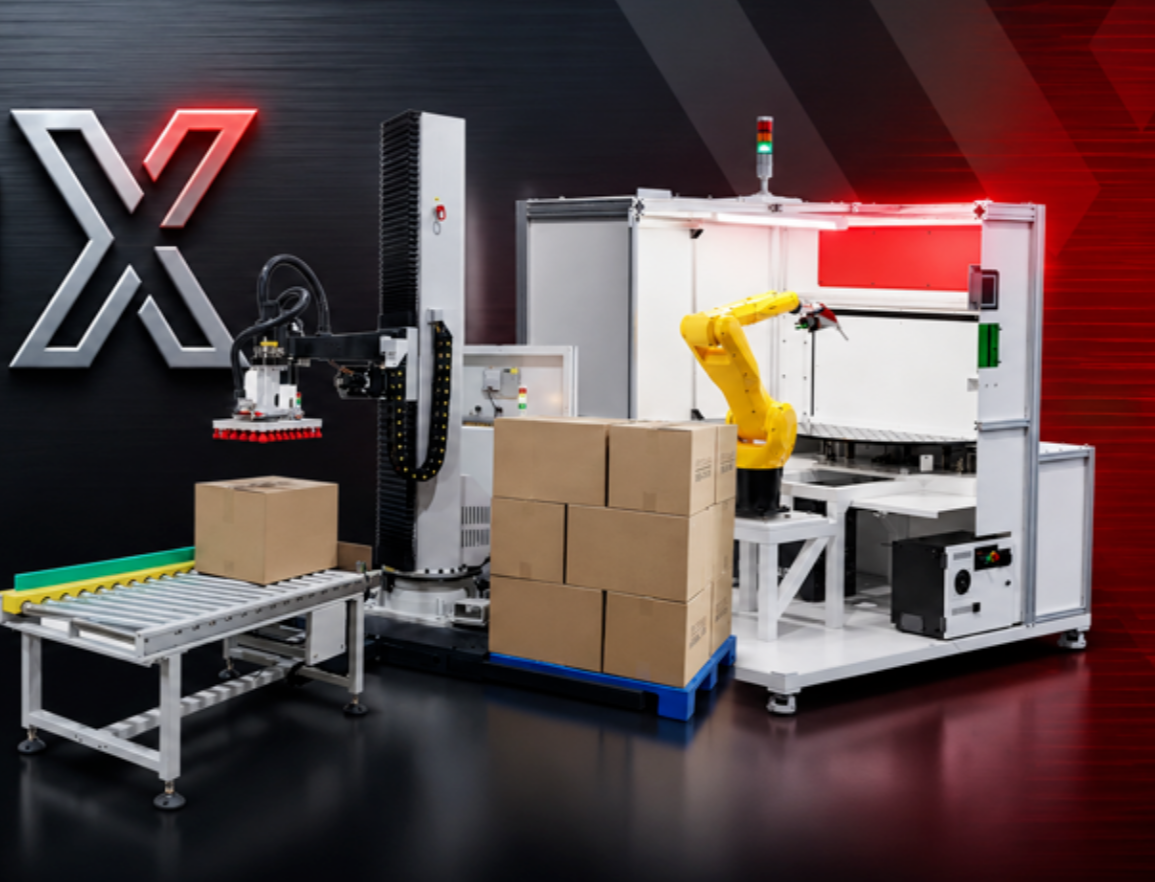
End-of-line palletizing is one of the most repetitive and physically demanding operations in manufacturing — which is exactly why it's one of the first processes worth automating. If replacing trained operators is a challenge, or manual stacking is slowing your line, a palletizing robot can be a quick-return solution.
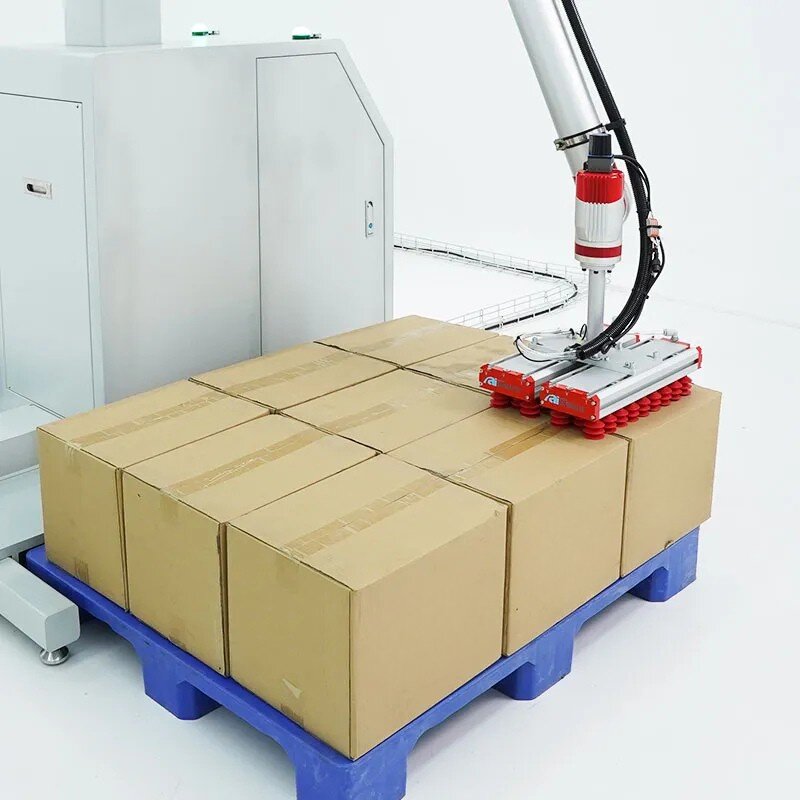
Why is palletizing the first step in automation?
Palletizing is a well-defined, repetitive task: place boxes of known weight according to a predetermined pallet pattern. That makes it ideal for a robot — it requires no human judgment, yet it's tiring and risky for people (back strain, repetitive injuries). An automated palletizing cell takes over this load while your staff move to higher-value tasks.
What does a palletizing robot solve?
- Labor shortage: the robot runs continuously, across multiple shifts, with no training or turnover.
- Consistent quality: every pallet is built accurately to the same pattern — fewer damaged products and collapsed loads.
- Ergonomics and safety: heavy, repetitive lifting is eliminated, reducing workplace injuries.
- Predictable capacity: cycle time is constant, so output is plannable.
How to choose: payload and speed
The two key factors are payload and cycle time. For light boxes, speed matters most; for heavy unit loads (up to 130 kg), stable payload capacity is decisive. The SmartCell-X range covers models from 50 to 130 kg at 6–15 cycles per minute, so the solution can be matched to your line's actual pace.
Fenced or collaborative?
If the robot must work in a tight space near people, a collaborative, fenceless version (with an integrated laser scanner) is the right choice, as it requires no large guarded area. If speed is the priority and space allows, a classic palletizing robot with a safety fence handles a faster pace. Each has its ideal scenario — the decision depends on your facility.
Modular, with fast deployment
SmartCell-X palletizing solutions are standardized and modular, so lead time from order to commissioning is short. They work as standalone systems or integrated into an existing line, and fit your current equipment regardless of robot brand.
Curious how a palletizing robot would look on your production line? Contact us for a no-obligation consultation — our engineers will walk you through the process and the right solution.